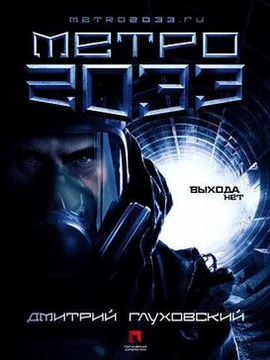
Enemy AI (Bandits, Soldiers, Mutants)
In the dark, every shadow moves, every sound is a death sentence, and the tunnel remembers.

Enemy AI in Metro 2033 encompasses three distinct categories of adversaries that populate the post-nuclear tunnels of the Moscow Metro: human bandits, organized military soldiers, and mutated creatures. Each category presents a fundamentally different combat challenge, from the desperate, cover-using aggression of scavenger groups to the tactical coordination of armed soldiers, to the blind, sensory-driven swarming of mutants that have evolved in absolute darkness over decades. The AI system is designed to exploit the game's core atmospheric pillars—near-total darkness, limited ammunition, and claustrophobic tunnel geometry. Enemies do not simply patrol; they ambush, flank, call for reinforcements, and react to the player's flashlight beam and weapon noise. This makes every encounter feel like a survival negotiation rather than a straightforward gunfight, reinforcing the novel's theme of humanity's fragile persistence in a world that has turned hostile.
- Franchise
- Metro 2033 (novel by Dmitry Glukhovsky; game by 4A Games)
- Enemy categories
- Bandits, Soldiers, Mutants
- Core AI behaviors
- Ambush, cover usage, group coordination, sensory attraction (sound/light)
- Key player constraint
- Limited bandolier ammo; darkness; flashlight as both tool and liability
- Setting
- Post-nuclear Moscow Metro tunnels and surface
- Protagonist
- Artyom
Lore & Background
Decades after the nuclear exchanges that buried Moscow under ash and radiation, the Metro became the last refuge for scattered survivors. Without sunlight, without law, and with food growing scarce, the tunnels bred a new ecology. Those who remained below adapted: eyes enlarged or lost, limbs elongated, aggression sharpened by generations of hunger. The mutants—bats, rats, spiders, tunnelsnakes, and the smaller mouse-like creatures—are not intelligent in any human sense, but their sensory systems are tuned to vibration, heat, and the faint glow of a flashlight. They do not hunt out of malice; they hunt because the dark made them hungry and the dark made them fast. The human enemies tell a different story. The bandits encountered in the mid-level tunnels are former civilians and demobilized soldiers who turned to raiding supply caches and other survivors to eat. They are poorly armed, often desperate, and their aggression is the aggression of people who have forgotten that cooperation was possible. The soldiers—Russian and Ukrainian forces who dug in during the war and never received orders to stand down—still operate with military discipline. They hold positions, use suppressive fire, coordinate flanking maneuvers, and will throw grenades or call for backup. Their AI reflects a chain of command: they do not act alone. Within the narrative, the AI behavior mirrors the story's central tension. Artyom is not a soldier; he is a survivor with a bandolier of rounds and a flashlight. The enemies are not designed to be 'defeated' in a power-fantasy sense. They are designed to make the player feel the weight of every bullet spent, every second of darkness endured, and every choice between fighting, hiding, or running. The AI is, in effect, the Metro itself: indifferent, patient, and always watching from the black.
In Their Own Story
The corridor beyond the D6 checkpoint smelled of rust and old blood. Artyom kept his flashlight low, the beam just enough to see the next two metres of tunnel wall. Somewhere ahead, a boot scuffed gravel. Then another. Then the wet click of a bolt being racked. He pressed his back against the cold concrete. The bandit's silhouette moved sideways, pistol raised, scanning the dark with the same narrow beam Artyom had just extinguished. Two more shapes behind him. They were talking—low, quick, the cadence of men who had been talking to each other for years and had forgotten how to be quiet. Artyom counted his remaining rounds. Four. Maybe five. The bandolier strap was worn thin at the shoulder. He thought of the mutant tunnel he had crossed an hour ago, the way the bats had scattered at the first shot, the way the rats had come back in threes, in fives, in a tide of clicking teeth. He thought of the soldiers at the surface checkpoint who had not even looked up when he passed, who treated him as a number on a manifest. The bandit's beam swept past his face. Artyom held his breath. The beam passed. The footsteps receded. He did not move for a long time. The dark pressed in like water. Somewhere far below, something large and patient shifted in the black, and the tunnel groaned with the sound of stone settling over a body that was no longer there.
Reader's Guide
Bandits operate in small groups of two to four, typically holding a corridor or junction. They will spot the player at medium range, break cover, and advance with suppressive fire. They do not coordinate flanking as well as soldiers, but they will reposition and use cover objects (crates, rubble) to break line of sight. In the original 2010 release, bandit AI could occasionally path through geometry or lose aggro when the player dropped to prone. Narrative justification: they are desperate, not trained. Their aggression is panic-driven, which is why they commit to a fight rather than repositioning intelligently. Soldiers are the most tactically layered enemy. They hold defined positions, use cover in sequence, throw grenades when the player is pinned, and call for reinforcements if a squad-mate is down. They will suppress with automatic fire while a second soldier flanks. In the original, some soldiers would stop firing and simply stand in cover if the player stayed still for too long; the Enhanced Edition made them more likely to re-engage. A practical tip: eliminate the grenade-thrower first, or use a smoke grenade (where available) to break their line of sight and reposition. Their military discipline means they will not chase you indefinitely into a complex tunnel—if you break line of sight and stay quiet, they will reset to their patrol positions. Mutants are governed by sensory AI rather than tactical logic. Bats and small rats swarm from above or the floor and are fast but low-health; a single well-placed shot or a burst can clear a cluster. Spiders and tunnelsnakes are larger, tougher, and will lunge aggressively. Mice are small and fast but individually trivial. The critical mechanic: mutants are attracted to sound and light. Firing a weapon or sweeping your flashlight into a dark tunnel will draw them in from off-screen. In the original, some mutant types had a brief 'stun' after a hit; the Enhanced Edition reduced this, making them more immediately aggressive. The narrative logic is biological: they evolved in total darkness, so their primary senses are vibration and heat. Your flashlight is a beacon. Your gunshots are a dinner bell. Move quietly, keep the beam low, and treat every dark junction as potentially occupied. General tips across all three types: conserve ammo by using the melee option where safe (especially against mutants, where a single hit can stagger them); listen to footstep and breathing audio cues to identify enemy type and direction before committing to a fight; and remember that the Metro's geometry is your ally—narrow passages force enemies into single-file, which neutralizes their group advantage.
Did You Know?
- The mutant AI in Metro 2033 is driven primarily by sensory inputs—sound and light—rather than scripted patrol routes, meaning a single gunshot in a quiet tunnel can pull creatures in from multiple off-screen directions s
- Soldier AI in the game includes a reinforcement-calling behaviour: if one soldier is killed, nearby allies will radio for backup, spawning additional enemies at a nearby junction rather than simply continuing the current
- The bandolier ammo system means that every enemy encountered is a resource decision, not just a combat one; the AI's persistence in pursuit is designed to force the player to weigh the cost of a prolonged engagement agai
More in Gameplay & Mechanics
Elsewhere in the Metro 2033 universe
Spotted an error? Know more?
This is a living reference — every entry is fact-audited, and reader corrections feed straight into our audit queue. Suggest an edit · See this site's audit record