The Doctor
A mind that kept dissecting long after the world stopped making sense.

The Doctor is a supporting character in the Metro 2033 universe, a former scientist and medical researcher who has taken up residence in one of the deep underground stations of the Moscow Metro. Encountered by the protagonist Artem during his journey through the tunnels, he represents the fractured remnants of pre-war scientific knowledge, now twisted by isolation, radiation exposure, and the psychological toll of living in perpetual darkness. His role in the narrative is that of an uneasy ally: a man who still thinks in the language of research and hypothesis but whose methods and mental state have been warped by years of solitude and experimentation in a world where surface life is all but gone. He provides Artem with information and, in some accounts, medical aid, but his reliability is always in question.
- Role
- Scientist / Medical researcher
- Affiliation
- D6 station (underground Moscow Metro)
- First appears
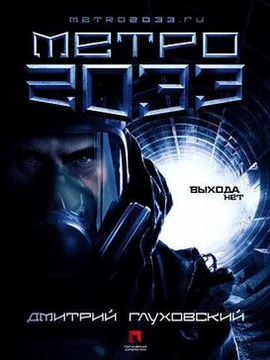
- Metro 2033 (novel by Dmitry Glukhovsky, 2002; game by 4A Games, 2010)
- Species
- Human (mutated / irradiated)
- Status
- Alive at time of Artem's passage (fate beyond that is not definitively shown)
Lore & Background
In the post-nuclear Moscow of Metro 2033, most of the pre-war scientific establishment is gone. What remains are scattered individuals who clung to fragments of their former professions, huddled in stations deep enough to escape the worst of the surface radiation. The Doctor is one such survivor. He was, before the war, a researcher whose work intersected medicine and biology. After the bombs fell, he retreated into the lower levels of the metro network and continued his work in a form that would have horrified his former colleagues: experimentation on whatever organic material the tunnels provided, driven by a need to understand mutation, adaptation, and the limits of the human body under radiation. By the time Artem passes through his station, the Doctor has been alone for a long time. His quarters are cluttered with notes, preserved specimens, and improvised surgical equipment. He speaks in the clipped, analytical register of a man who has replaced all human warmth with taxonomy. He is not hostile, but he is not safe either; his judgment is clouded, his sense of time unreliable, and his experiments raise questions Artem is not prepared to answer. The interaction is brief but unsettling: a reminder that the tunnels do not merely threaten with monsters and gas, but with the slow erosion of the human mind. In the broader thematic architecture of Metro 2033, the Doctor embodies one of the novel's and game's central questions: what happens to knowledge when its context is destroyed? He still knows how to suture a wound, how to identify a compound, how to formulate a hypothesis. But the world that gave those skills meaning no longer exists, and his continued practice of them is, to him, the only proof he is still a person rather than just another thing in the dark.
In Their Own Story
The air in D6 tasted of rust and old antiseptic. Artem's gas mask filtered most of it, but not the smell of the jars—rows of them, catching the amber glow of a single kerosene lamp. The Doctor did not look up when the footsteps stopped at the edge of his workspace. He was working with a scalpel on something that might have been a hand, might have been a claw; the distinction, he had explained once, was "merely a matter of the number of phalanges."
"You're the one from the surface tracks," the Doctor said, still not looking up. His voice was dry, papery, like pages turning in an empty room. "Sit. Don't touch the third shelf. That one's still… active."
Artem sat on an overturned crate. The Doctor finally raised his eyes—pale, watery, the pupils blown wide in the dim light. He studied Artem the way one studies a specimen under glass: cataloguing, measuring, filing. "You'll want to know what's down there," the Doctor said. It wasn't a question. "I can tell you the taxonomy. I cannot tell you the ethics. I stopped having those, somewhere around the third year."
He set down the scalpel. Wiped his hands on a rag that was already dark. "Go, then. And if the gas gets you, don't bother coming back. I've run out of suture."
Reader's Guide
The Doctor Role: Scientist / Medical researcher Affiliation: D6 station, underground Moscow Metro Key relationships: Artem (brief interaction; provides information and limited medical aid); no other named relationships are established in the canon. First appearance: Metro 2033, the novel by Dmitry Glukhovsky (2002); also present in the 4A Games video game adaptation (2010). Narrative summary: The Doctor is a pre-war researcher who survived the nuclear war by retreating into the lower levels of the Moscow Metro. Isolated in D6 station, he continued his scientific work in a degraded, obsessive form, conducting experiments on biological specimens gathered from the tunnels. By the time of Artem's journey, he is a gaunt, pale figure whose mental state has been eroded by years of solitude and the constant presence of mutation. He is not a villain, but he is not a safe ally either; his advice is accurate but his perspective is warped, and his experiments raise moral questions the narrative does not resolve. His encounter with Artem is brief: a tense, claustrophobic exchange in a cluttered, lamp-lit workspace where the boundaries between healer and experimenter have dissolved. He provides Artem with practical information needed to continue the journey, but the interaction leaves the reader or player with the lingering unease that this man is a living argument against the idea that knowledge alone is sufficient to preserve one's humanity. His fate beyond this encounter is not definitively shown in the primary canon; he simply remains in his station, a fixed point in the tunnels' geography, a reminder that the Metro holds more than survivors—sometimes it holds the things that survived by becoming something else.
Did You Know?
- The Doctor's workspace in the game is one of the few interior environments in Metro 2033 lit primarily by a single warm light source, a deliberate contrast to the cold blue-green fluorescence of most station interiors.
- In the novel, the Doctor's experiments reflect a broader theme in Glukhovsky's writing: the persistence of pre-war academic categories (taxonomy, classification, hypothesis) in a world where the objects of study have bec
- The Doctor is not the only medical or scientific figure in the Metro 2033 universe; other stations have their own practitioners, but he is the one most explicitly associated with active, ongoing experimentation rather th
- The character's design in the 4A Games adaptation emphasizes physical deterioration—pale skin, dilated pupils, disheveled hair—visually communicating years of subterranean isolation without a single line of dialogue.
Elsewhere in the Metro 2033 universe
Spotted an error? Know more?
This is a living reference — every entry is fact-audited, and reader corrections feed straight into our audit queue. Suggest an edit · See this site's audit record