Surface survivor groups
Above the tunnels, the sky is a wound and every breath is a gamble against the radiation.

In the post-nuclear world of Metro 2033, the vast majority of Moscow's remaining population huddles in the tunnels and stations of the city's subway system, where the concrete and earth above provide the only meaningful shelter from lethal radiation. Surface survivor groups, by contrast, are scattered, largely unorganized clusters of people who have either refused to descend into the Metro or have been cast out of it. They live among the irradiated ruins of the city above, scavenging, fighting, and dying in a world where the sky is a constant reminder of the war that ended civilization. These surface dwellers are not a single faction. They range from desperate, feral scavengers who raid Metro entrances for supplies to more structured communities that maintain a fragile existence in the open. The most organized group with a significant surface presence is the Anabaptist order, a religious faction that treats the surface as sacred ground and uses it for rituals and expansion, blurring the line between an underground Metro faction and a surface community.
- Setting
- Post-nuclear Moscow, Russia
- Primary habitat of most survivors
- Moscow Metro (subway) tunnels and stations
- Surface condition
- Heavily irradiated; open sky is lethal without protection
- Most organized surface-using faction
- The Anabaptists (religious order)
- Protagonist
- Artyom
- Source novel
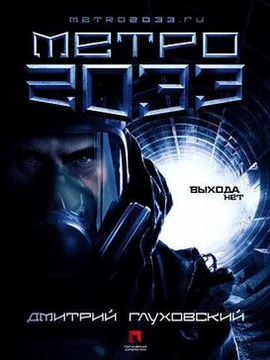
- Metro 2033 by Dmitry Glukhovsky (2002)
- Video game adaptation
- Metro 2033, developed by 4A Games (2010)
Lore & Background
The nuclear war that ended the old world left Moscow's surface a killing zone. The Metro, with its thick concrete ceilings and deep tunnels, became the de facto city for hundreds of thousands of survivors. Over the decades, a culture formed underground: stations became neighborhoods, factions became governments, and the surface became a mythic, almost religious concept. For most Metro dwellers, going above means death, and the people who actually live there are regarded with a mixture of pity, fear, and contempt. Those who survive on the surface do so in small, isolated pockets. They lack the resources, medical care, and social structures of the Metro stations. Many are former Metro residents who were exiled, went mad, or simply chose the open sky over the claustrophobic dark. They scavenge ruined buildings for food, fuel, and ammunition, and they view the Metro people as soft, weak, and hoarding the only real shelter left. Raids on Metro entrances are not uncommon, and the surface dwellers who carry out these attacks are often desperate rather than ideologically driven. The Anabaptists represent the most structured exception. Their faith holds that the nuclear war was divine judgment and that technology and the old world's comforts are sins. They operate from stations in the Metro but treat the surface as a holy space, sending followers above for rituals, construction, and expansion. Their surface activities make them the only faction that genuinely straddles both worlds, and their presence above ground makes them a unique and persistent threat to anyone else trying to survive in the open.
In Their Own Story
The wind off the dead river carried a taste of metal and ash. Kolya pulled his scarf tighter over his nose and crouched behind the rusted husk of a bus, watching the Metro entrance below. Three of them, maybe four, climbing up the stairs with their gas masks and their stupid, soft eyes. They didn't know what the sky did to you. They didn't know that the sun up here wasn't the sun down there. He checked the magazine in his rifle—two rounds. Two rounds and a prayer to whatever god still listened in this grey, ruined world. Below, the Metro people would call him a feral. A surface rat. He let them. Down there, at least, you had a ceiling. Up here, you had the whole dead sky, and it was the only honest thing left in Moscow.
Reader's Guide
Surface survivor groups in Metro 2033 are best understood not as a single faction but as a category of existence. The scattered surface dwellers are unorganized, often hostile to Metro people, and survive through scavenging and opportunistic raids on subway entrances. They have no formal leadership, no ideology beyond staying alive, and no fixed territory beyond whatever ruined block they happen to occupy. Their relationship with the Metro factions is one of mutual suspicion: Metro people see them as feral and dangerous, while surface dwellers see Metro people as hoarding shelter and resources. The Anabaptists are the critical exception. As a religious order, they maintain stations within the Metro but treat the surface as sacred ground. Their followers go above for rituals, construction projects, and what they consider spiritual purification. This makes them the only faction with a deliberate, sustained surface presence, and it gives them a strategic advantage: they can operate in the open while most other factions are confined to tunnels. Their rivalry with the other Metro factions (the Communists, the Nazis, the Free Corps, and various bandit groups) is primarily an underground political struggle, but their surface activities make them a visible, persistent threat to any surface survivor who is not part of their order. In the central conflict of the story, surface survivor groups serve as a reminder of what the Metro has lost. They are the living proof that the old world is truly gone, that the surface is no longer habitable in any conventional sense, and that the only future for Moscow's people is either deeper into the tunnels or a desperate, uncertain journey beyond the city. They are not heroes or villains; they are what remains when civilization is stripped to its barest survival logic.
Did You Know?
- In the Metro 2033 universe, the surface of Moscow is so heavily irradiated that most survivors consider going above ground equivalent to a death sentence, making the small number of surface dwellers an anomaly rather tha
- The Anabaptists are the only major faction that deliberately and regularly operates on the surface, treating it as sacred ground for their religious rituals, which sets them apart from every other Metro faction that stay
- The Metro 2033 novel by Dmitry Glukhovsky was published in 2002, and its video game adaptation by 4A Games came out in 2010, making the surface survivor concept a core part of the setting for over a decade before the gam
- Surface dwellers in the Metro canon are not a unified political group; they are scattered individuals and small clusters whose only common trait is that they refused or were forced to live above the irradiated ruins rath
More in Factions & Groups
Elsewhere in the Metro 2033 universe
Spotted an error? Know more?
This is a living reference — every entry is fact-audited, and reader corrections feed straight into our audit queue. Suggest an edit · See this site's audit record