The Spiders
In the dark above the tunnels, the webs are already waiting.

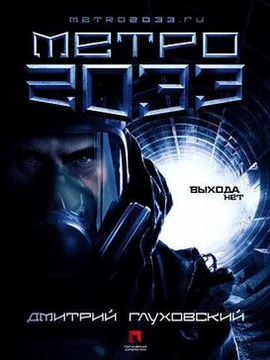
The Spiders are a faction of mutated humans in the Metro 2033 universe who inhabit the upper levels of the Moscow Metro system. Distinguished by a grotesque mutation that grants them the ability to produce and weave silk-like webs, they are among the most alien and dangerous threats Artyom encounters above the tunnels. Their society is matriarchal, organized around a dominant Spider Queen, and they regard every outsider who enters their territory as prey to be trapped and consumed. They appear across the franchise—in Dmitry Glukhovsky's original 2005 novel and in the 4A Games video game adaptations—serving as a vivid reminder that the post-nuclear surface is populated by horrors that have adapted in ways no one in the stations could have predicted.
- Role
- Hostile mutated faction; upper-level antagonists
- Affiliation
- Upper levels (surface), Moscow Metro
- First appears
- Metro 2033 (novel, Dmitry Glukhovsky, 2005)
- Nature
- Mutated humans with web-spinning mutation
- Society
- Matriarchal, led by a Spider Queen
- Behavior
- Cannibalistic, territorial, ambush predators
Lore & Background
The Spiders represent one of the most unsettling outcomes of the post-nuclear mutations that reshaped humanity in the Metro world. Where other surface dwellers are merely deformed or feral, the Spiders have undergone a specific, almost purposeful adaptation: the growth of extra limb structures and the ability to secrete a strong, adhesive silk from which they build vast web networks throughout the upper levels of the metro. These webs serve simultaneously as shelter, trap, and hunting ground. A person caught in them is immobilized, slowly consumed, and incorporated into the colony's stores. Their social structure is rigidly matriarchal. The Spider Queen sits at the apex, her body larger and more heavily mutated than the others, and her will governs the colony's movements, hunts, and defenses. The rest of the Spiders—warriors, weavers, and younger, less-developed individuals—operate in loose coordination beneath her. They communicate through a mix of guttural vocalizations and chemical signals, and they show no curiosity or negotiation toward outsiders. To them, a human in a gas mask is indistinguishable from any other meat that wanders into the web. In the broader Metro narrative, the Spiders occupy a specific ecological niche: they are the upper-level apex predators of the tunnel system's surface extensions. They coexist—hostile and mutually exclusive—with other surface factions, and their territory is marked by the unmistakable sight of dense, glistening webbing draped over stairwells, platforms, and the skeletal remains of the old city above. For the station-dwellers below, the Spiders are a cautionary tale made flesh: proof that the surface has not merely survived the war but has produced new, terrible things.
In Their Own Story
The stairwell was dark, but not the clean dark of the tunnels. This was a wet, organic dark, and the air tasted of something sweet and rotten. Artyom's flashlight beam caught the first strand at knee height—a pale, glistening thread stretched between a rusted handrail and the concrete wall. Then another. And another. Within three steps the shaft of light was a cage of silk, each strand catching the beam in a faint iridescent sheen. He stopped. His breath fogged the inside of his mask. Above him, in the gloom where the stairwell opened into what had once been a platform, something shifted. A low, clicking sound, like a mandible testing its edge. The webs around him tightened almost imperceptibly, as if the whole structure were a single lung drawing in. He did not climb. He backed down, one hand on the wall, the other on his rifle, and tried not to think about the pale, segmented shapes he could just make out in the upper dark—shapes that had too many joints, too many legs, and a patience that had outlasted the war by a generation. Behind him, the clicking grew louder. The webs were already reaching.
Reader's Guide
The Spiders (Collective) — Role: Hostile mutated faction of the upper levels. Affiliation: Surface / upper-level territory of the Moscow Metro. Key relationships: Antagonistic to all station-dwellers and surface travelers; coexist hostilely with other mutated groups in the upper levels. First appearance: Metro 2033, the 2005 novel by Dmitry Glukhovsky; subsequently in the 4A Games video game adaptations. Narrative summary: The Spiders are encountered by Artyom during his journey into the upper levels. They are not a single character but a colony, and their threat is environmental as much as combative—their webs turn ordinary architecture into a killing maze. In the novel, Artyom must navigate through or past their territory, and the encounter underscores the theme that the surface has produced horrors beyond the stations' comprehension. In the games, the Spiders serve as a recurring hostile faction, their web-filled environments creating a distinct gameplay challenge of restricted visibility, sticky surfaces, and ambush from multiple angles. They do not negotiate, do not reveal information, and do not survive the encounter with the protagonist. Their role across the franchise is that of a fixed, ecological predator: a constant, inhuman danger that marks the upper levels as genuinely hostile territory. The Spider Queen — Role: Matriarch and apex of the Spider colony. Affiliation: Upper levels. Key relationships: Commands the entire Spider colony; no known alliances with other factions. First appearance: Metro 2033 (novel, 2005). Narrative summary: The Spider Queen is the largest and most heavily mutated individual in the colony, her body a grotesque amplification of the web-spinning mutation shared by her kin. She is less a warrior than a sovereign: her presence reorganizes the colony's behavior, and her territory is the densest weave of silk in the upper levels. In the narrative, she represents the apex of the Spiders' threat—not a single fight but the culmination of everything the colony has built. Artyom's confrontation with her is the final test of the upper-level segment, after which the colony is dispersed or destroyed and the webs begin to sag and rot. She does not speak, does not threaten, does not monologue. She simply is, and she simply kills, and that is the point: in the Metro world, the most dangerous things are not evil. They are simply adapted.
Did You Know?
- The Spiders' webs are not merely a visual effect in the games; they function as a gameplay mechanic that restricts movement, slows the player, and obscures visibility, making their territory one of the most disorienting
- In Glukhovsky's novel, the Spiders are one of several distinct mutated groups in the upper levels, each with its own ecology and behavior, reinforcing the idea that the surface has become a new, uncharted biome.
- The Spiders' matriarchal structure and web-building behavior draw on real arachnid colony biology, transposed onto a human mutation to create a sense of uncanny, biological horror rather than mechanical or military threa
- Their first appearance in the 2005 novel predates the video game adaptations by several years, and the games' depiction of them—web-filled stairwells, clicking sounds, ambush from above—was designed to translate the nove
Elsewhere in the Metro 2033 universe
Spotted an error? Know more?
This is a living reference — every entry is fact-audited, and reader corrections feed straight into our audit queue. Suggest an edit · See this site's audit record