X-Ray Engine
The engine that lit the tunnels of the Metro.

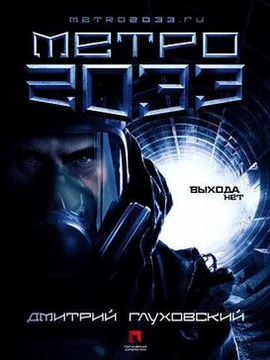
The X-Ray Engine is the proprietary game engine developed by 4A Games for the Metro series, beginning with Metro 2033. It is responsible for the franchise's distinctive blend of first-person shooter mechanics, survival horror atmosphere, and advanced real-time lighting and volumetric effects—most notably its celebrated dynamic lighting system, which simulates the harsh, flickering illumination of the post-apocalyptic Moscow Metro as if every bulb were on the verge of dying.
- Developer
- 4A Games
- First used in
- Metro 2033
- Type
- Game engine
Lore & Background
The X-Ray Engine was built on a heavily modified version of the S.T.A.L.K.E.R. engine (X-Ray Engine from GSC Game World), not built entirely from scratch. 4A Games, a studio founded by former S.T.A.L.K.E.R.: Shadow of Chernobyl developers, took the core technology and extensively reworked it for their own vision. Its name reflects its core design philosophy: to render the world with a 'see-through' fidelity, allowing players to perceive the grim reality of the Metro through realistic lighting and environmental detail. The engine's dynamic lighting system was a technical marvel at release, enabling hundreds of light sources to cast real-time shadows in the cramped, claustrophobic tunnels, creating an unparalleled sense of dread and immersion. Beyond lighting, the X-Ray Engine powers the series' signature stealth and survival mechanics. It handles complex AI routines for human and mutant enemies, supports detailed weapon customization, and manages the game's resource management systems, such as the need to change gas mask filters or recharge batteries for the flashlight. The engine's physics system also allows for interactive environments, from breaking glass to collapsing structures, reinforcing the fragility of the world above and below. For Metro: Last Light, the engine was significantly upgraded to support more advanced tessellation, improved particle effects, and better performance on then-current hardware. It continued to evolve for Metro Exodus, where it was adapted to render expansive outdoor environments, including dynamic weather, day-night cycles, and seasons, while retaining the core lighting and atmospheric strengths that defined the series.
In Their Own Story
The tunnel was dark, but the stalker's lamp cut a sharp cone through the dust. He moved past a rusted pipe, and the light from his torch cast a long, jagged shadow across the wall—a shadow that shifted as he breathed. A mutant's growl echoed from a side passage. He didn't see it, but the light did. It painted the creature's silhouette for a fraction of a second against a broken grate, a flicker of movement caught by the engine's relentless calculation. He fired, the muzzle flash illuminating the tunnel in a single, blinding pulse, and then the darkness returned, deeper than before. The X-Ray Engine had seen it all.
Reader's Guide
The X-Ray Engine was developed by 4A Games, a studio based in Kyiv, Ukraine, and Malta. The engine first shipped with Metro 2033 in 2010 on PC and Xbox 360, later ported to PlayStation 4 and Xbox One via the Redux versions. Critics praised its technical ambition, especially the dynamic lighting and volumetric effects, which punched far above the weight of a mid-budget title—rivaling, and in some ways surpassing, AAA engines of the day. But the engine had a dark side: it was notoriously demanding on hardware. On lower-end systems at launch, players often had to choose between smooth framerates and the game's signature visual fidelity. The engine's hunger for GPU power became a running joke in the community, with some calling it the 'Slide Show Engine' on modest rigs—yet those who could run it were rewarded with an atmosphere no other shooter could match.
Did You Know?
- The X-Ray Engine was developed by 4A Games, whose founders had experience working on S.T.A.L.K.E.R.: Shadow of Chernobyl at GSC Game World.
- Metro 2033 was the debut title for 4A Games, and the engine was their proprietary 4A Engine.
- The game was first announced in 2006 as Metro 2033: The Last Refuge.
- A remastered version titled Metro 2033 Redux was released in 2014 for Microsoft Windows, PlayStation 4 and Xbox One.
Frequently Asked Questions
Who developed the X-Ray Engine?
This proprietary software was created by 4A Games to power their specific vision for the Metro franchise. It first launched with the original Metro 2033 game in 2010.
What are the key visual features of the engine?
The system is famous for its advanced dynamic lighting and volumetric fog effects that mimic dying lightbulbs in dark tunnels. These tools create a dense, atmospheric environment crucial to the survival horror experience.
Which titles utilize this technology?
It serves as the foundation for Metro 2033, Last Light, and Exodus on various platforms. Recent updates continue to refine the engine for newer installments in the series.
How does it handle gameplay mechanics?
Beyond graphics, the engine supports destructible environments that allow players to alter the battlefield during firefights. This technical capability enhances tactical freedom within the first-person shooter framework.
Why is it significant to the Metro legacy?
The X-Ray Engine established the unique visual identity of the underground world by rendering oppressive gloom realistically. Its lighting technology remains a benchmark for atmospheric storytelling in video games.
More in Development & Legacy
Elsewhere in the Metro 2033 universe
Spotted an error? Know more?
This is a living reference — every entry is fact-audited, and reader corrections feed straight into our audit queue. Suggest an edit · See this site's audit record