Moscow Metro
Beneath the ruins, the last light of humanity.

The Moscow Metro is the decaying, concrete womb of humanity in the Metro 2033 franchise—a vast underground railway system that became the last refuge after nuclear fire scoured the surface. It is not merely a transportation network but a fractured, post-apocalyptic society where starving factions, crawling mutants, and inexplicable phenomena dictate survival. The Metro's labyrinthine tunnels and stations form the claustrophobic core for exploration, desperate combat, and haunting storytelling across the series.
- Role
- Primary setting and survival environment
- Affiliation
- Various factions (e.g., Red Line, Hansa, Polis, Fourth Reich)
- First appears
- Metro 2033
- Status
- Inhabited, contested, and partially explored
Lore & Background
The Moscow Metro was originally a marvel of Soviet engineering, a public transit system carved deep into the earth. After the nuclear war, those same tunnels became a subterranean ark. Stations designed for commuters were hastily repurposed into fortified shelters, makeshift bazaars, and brutal garrison towns. Above, the surface is a lethal wasteland—poisoned air, searing radiation, and hulking mutants ensure no one lingers under the open sky. The Metro's staggering depth and complexity—some stations lie over 80 meters down, connected by pitch-black, miles-long tunnels—create a world of perpetual twilight where a flickering bulb is a luxury, resources are measured in bullets, and trust is a currency rarer than clean water.
In Their Own Story
The air in the tunnel was thick with the smell of damp concrete and old smoke. Artyom pressed his back against the cold wall, listening to the distant scrape of claws on metal. A single bulb flickered overhead, casting long shadows that danced like ghosts. Somewhere ahead, a station market hummed with desperate trade; behind him, the darkness of a forgotten line whispered of things that should not be. He tightened his grip on his rifle and moved forward, one step at a time, because the Metro does not forgive hesitation.
Reader's Guide
The Moscow Metro is the central world of the Metro 2033 games. It consists of a network of stations and tunnels, each with its own faction, economy, and hazards. Key stations like Polis serve as neutral grounds for trade and governance, while others, such as those on the Red Line, are militarized zones. The tunnels between stations are dangerous, patrolled by mutants like nosalises and watchmen, as well as hostile human groups. Players navigate this environment using a gas mask for surface excursions, a flashlight for dark tunnels, and weapons crafted from scrap. The Metro's layout is non-linear, with multiple paths and hidden areas encouraging exploration. Its role is both a home and a prison, shaping the survivalist themes of the franchise.
Did You Know?
- The Moscow Metro in Metro 2033 is based on the real Moscow Metro, which was originally a marvel of Soviet engineering.
- Some stations in the Metro lie over 80 meters deep, connected by miles-long tunnels.
- The Commonwealth of Ring Stations is nicknamed 'Hansa' after the Hanseatic League.
- The Dark Ones were trying to communicate with humanity, but their attempts were misinterpreted as aggression.
- Artyom was saved from a horde of carnivorous rats as a baby by a military officer named Sukhoi.
Origins and Franchise Expansion
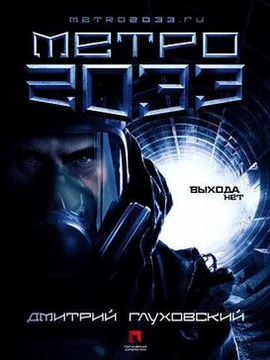
Dmitry Glukhovsky's 2002 novel established a grim post-apocalyptic vision where the Moscow Metro serves as the final sanctuary for humanity following a global nuclear catastrophe. Originally written in Russian, this foundational work sparked a massive media franchise that includes two direct sequels, Metro 2034 and Metro 2035, expanding the lore of the underground world. The story gained significant international traction when its English edition was released as a tie-in with a popular video game adaptation in 2010. This multimedia success transformed a standalone Russian fiction piece into a global phenomenon, introducing audiences worldwide to the unique setting where survivors have carved out independent nations within the city's subterranean transit system.
Factions and Underground Politics
Decades after the war, the Metro stations evolved from simple shelters into distinct political entities with conflicting ideologies. The narrative features powerful groups like Polis, which holds superior military strength and historical knowledge, and the Commonwealth of Ring Stations, known as Hansa, which dominates through economic control of the main ring line. In stark contrast, extremist factions such as the neo-Stalinist Red Line and the neo-Nazi Fourth Reich are locked in a brutal war for dominance, often destroying neutral stations or forcing them into submission. Amidst this turmoil, independent alliances like VDNKh struggle to survive against criminal bandits and mutated beasts, creating a complex geopolitical landscape where survival depends on navigating these volatile power dynamics.
Artyom's Journey Through the Tunnels
The story follows Artyom, a young man raised by a military officer named Sukhoi in the VDNKh station after surviving a rat attack as an infant. Driven by guilt over a past mistake that allowed hostile creatures called the Dark Ones to enter his home, Artyom embarks on a perilous journey across the Metro to deliver a warning to Polis. His trek is fraught with danger, including encounters with psychic forces, criminal gangs in Kitai-Gorod, and capture by the Fourth Reich. After escaping execution and navigating the strict borders of Hansa, he finally reaches Polis but finds the council unwilling to intervene. This rejection leads him deeper into the unknown, eventually guiding him toward a secret missile silo.
The Tragic Misunderstanding
The narrative culminates in a profound revelation regarding the mysterious Dark Ones. While Artyom and his companions locate a functioning missile silo with the help of scientists known as Brahmins, they face threats from mutated librarians and cannibalistic tribes worshipping a Great Worm. As they coordinate an attack on the Dark Ones' hive using Ostankino Tower for targeting coordinates, Artyom experiences a vision that recontextualizes the conflict. He realizes the creatures were not attacking out of malice but were desperately trying to communicate with humanity in a language humans could not understand. Tragically, this moment of clarity comes too late; the missiles strike and annihilate the Dark Ones just as Artyom understands their true nature.
Frequently Asked Questions
What is the Moscow Metro in the game series?
It serves as the primary underground setting where the remnants of humanity survive after a nuclear apocalypse destroyed the surface world. This vast, decaying railway system functions less as a transit network and more as a fractured society divided by warring factions.
Who lives inside the Moscow Metro stations?
Numerous hostile and cooperative factions control different sectors, including the democratic Polis, the authoritarian Fourth Reich, and the isolated Hansa. These groups compete for resources while facing constant threats from mutated creatures lurking in the dark tunnels.
Why is the Moscow Metro important to the story?
It represents the last known refuge of civilization, acting as a claustrophobic crucible where human morality is tested against extreme survival conditions. The labyrinthine structure drives the narrative by forcing characters into desperate conflicts and haunting explorations.
What kind of dangers exist within the Metro?
Survivors must navigate not only infighting between rival factions but also deadly mutant monsters that have evolved in the toxic darkness. Additionally, inexplicable supernatural phenomena often plague specific tunnels, adding a layer of psychological horror to physical threats.
Is the entire Moscow Metro system explored in the games?
Only a fraction of the vast underground network has been mapped or safely inhabited by survivors. Large portions remain unexplored ruins or are sealed off due to overwhelming radiation and infestation by dangerous entities.
More in World & Locations
Elsewhere in the Metro 2033 universe
Spotted an error? Know more?
This is a living reference — every entry is fact-audited, and reader corrections feed straight into our audit queue. Suggest an edit · See this site's audit record