VDNKh
The vast sealed halls of an exhibition complex, now a city of survivors beneath Moscow.

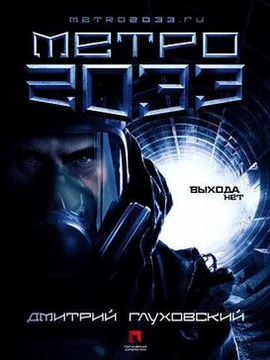
VDNKh is a major underground settlement in the Metro 2033 universe, built within the vast exhibition and industrial complex of the same name in Moscow. Originally a surface-level showcase for chemical and industrial products, the complex was sealed and repurposed after the nuclear war, becoming one of the largest and most significant refuges in the post-apocalyptic Moscow Metro network. In both Dmitry Glukhovsky's 2005 novel and 4A Games' 2013 video game adaptation, VDNKh functions as a critical hub: a place of trade, science, and relative stability compared to the more militarized or hostile stations. Its enormous interconnected halls give it a scale and openness that set it apart from the tighter, more claustrophobic tube stations, and it serves as a focal point for several major plot threads involving the search for a surface exit and the political struggles between Moscow's factions.
- Type
- Exhibition / industrial complex turned Metro settlement
- Location
- Moscow, Russia (underground)
- First appears
- Metro 2033 (novel, Dmitry Glukhovsky, 2005)
- Also featured in
- Metro 2033 (video game, 4A Games, 2013)
- Role in narrative
- Major settlement, trade hub, and site of key story events
- Scale
- One of the largest settlements in the Moscow Metro
Lore & Background
Before the war, VDNKh was a sprawling exhibition venue where chemical firms, industrial manufacturers, and state enterprises displayed their products to the public. Its architecture—long colonnaded halls, high vaulted ceilings, broad staircases, and open atriums—was designed for crowds and spectacle. When the bombs fell, the complex was sealed, its surface entrances buried or collapsed, and the people inside adapted to subterranean life. Over the decades that followed, the exhibition spaces became living quarters, workshops, marketplaces, and laboratories. The sheer volume of the halls meant VDNKh could sustain a population far larger than a typical tube station, and its relative spaciousness made it a magnet for traders, scientists, and those seeking to escape the more authoritarian governance of other settlements. In Glukhovsky's novel, VDNKh is depicted as a place of uneasy order. It hosts figures like Miller, a former scientist who has built a small enterprise of sorts within the complex, and it serves as a waypoint for Artyom's journey. The station's openness makes it both a sanctuary and a target: its size means it is harder to police, and its wealth of resources makes it a prize. The political dynamics of the Moscow Metro—factions, curfews, the ever-present threat of the Dark Ones in the tunnels—press against VDNKh's fragile sense of normalcy. In the 4A Games adaptation, VDNKh is rendered as one of the most visually distinctive areas: a cathedral-like expanse of concrete, rusted exhibits, and dim industrial lighting. The player moves through broad corridors and open floors, a stark contrast to the narrow, tunnel-crawling sections of other stations. Merchants, quest-givers, and faction contacts populate the space, reinforcing its role as a commercial and narrative crossroads in the game's structure.
In Their Own Story
The air in the main hall tastes of rust and old ozone. Artyom's gas mask fogs at the edges as he passes a row of sealed display cases—chemical formulas long since forgotten, their labels faded to ghosts of green and amber. A woman in a patched coat haggles with a merchant over a box of cartridges, her voice swallowed by the vaulted ceiling. Somewhere beyond the colonnade, a child laughs, and the sound bounces off the concrete and comes back wrong, stretched and thin. The fluorescent tubes overhead flicker in slow, arrhythmic pulses, casting the whole hall in a sickly amber. Artyom checks the magazine in his rifle, counts the shells, and walks on. The exit to the tunnel is two hundred metres east, past the old chemical pavilion where the ceiling has caved in and the dark is absolute. He does not look up. He has learned not to look up.
Reader's Guide
VDNKh reads as a vast, cathedral-like space compared to the cramped tube stations. The main exhibition hall stretches long and wide, its vaulted ceiling lost in shadow above. Rusted display cases, half-collapsed scaffolding, and the skeletal remains of industrial exhibits line the broad walkways. Fluorescent and emergency lighting casts everything in a dim amber or green wash, and the air carries a metallic, damp smell. The scale is disorienting—echoes return late, and distant sounds seem to come from everywhere at once. The complex is generally under the broader authority of the Moscow faction, but its size and commercial character give it a looser, more market-driven feel than the strictly militarized stations. Traders operate openly, and the area functions as a rest-and-resupply hub for travelers moving through the network. Notable encounters include interactions with merchants and quest-givers who provide equipment, information, and side objectives tied to the larger narrative. The area's openness also makes it a staging ground before the player ventures into more hostile tunnel sections. In the novel, the complex is the base of operations for figures like Miller and a waypoint in Artyom's journey. Tunnel connections radiate from the complex's periphery into the broader Moscow Metro network, linking VDNKh to neighboring stations and the deeper, more dangerous tunnel stretches. The passages are narrower and darker than the main hall, and the transition from the open exhibition space into the tight tunnels is one of the area's most pronounced atmospheric shifts.
Did You Know?
- VDNKh's original purpose as a chemical and industrial exhibition venue is reflected in its in-game set dressing: sealed display cases, faded product labels, and abandoned laboratory equipment dot the halls.
- In the novel, VDNKh's large population and relative openness make it a point of tension with the more authoritarian Moscow faction, creating political friction that drives several plot threads.
- The contrast between VDNKh's vast, open exhibition halls and the narrow, claustrophobic tube stations is a deliberate design choice in the game, used to vary pacing and player tension.
- The complex's pre-war architecture—high ceilings, colonnades, broad staircases—gives it a distinctly different visual identity from the standard circular metro stations, making it one of the most recognizable locations i
More in World & Locations
Elsewhere in the Metro 2033 universe
Spotted an error? Know more?
This is a living reference — every entry is fact-audited, and reader corrections feed straight into our audit queue. Suggest an edit · See this site's audit record