Moscow
The dead city above, the desperate struggle below.

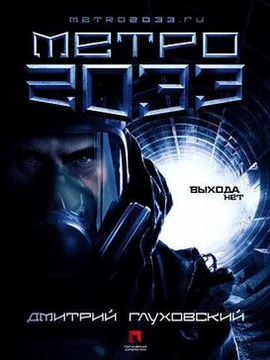
Moscow is the primary setting of the Metro 2033 franchise, a post-apocalyptic metropolis devastated by nuclear war in 2013. The city's surface remains a deadly, irradiated wasteland, where the skeletons of once-grand boulevards are choked with radioactive dust and the only movement comes from mutant packs and the howling wind. Beneath it all, the remnants of humanity survive in the tunnels of the Moscow Metro system, which has become a sprawling, claustrophobic network of city-states, factions, and dark, treacherous passages where the air is thick with smoke, fear, and the echoes of distant gunfire.
- type
- Post-apocalyptic urban wasteland
- condition
- Heavily irradiated and largely uninhabitable surface
- primary_survival_zone
- Moscow Metro system
- major_factions
- Hanza, Red Line, Fourth Reich, Polis, Rangers
- notable_landmark
- Ostankino Tower
- threats
- Mutants, radiation, warring factions, the Dark Ones
Lore & Background
Before the war, Moscow was a sprawling capital of culture and power, its streets alive with the hum of traffic and the glow of neon. The bombs reduced it to a grey, frozen ruin, its streets choked with ash and its skies perpetually overcast, as if the sun itself had abandoned the city. The few who survived the initial blasts fled into the Metro, a system designed for peacetime transport but now a labyrinthine ark, its tunnels reeking of damp concrete, sweat, and decay. Over two decades, the tunnels have become a world unto themselves, with stations transformed into fortified settlements, smoky marketplaces, and ideological strongholds where every flickering bulb and whispered rumor could mean life or death. The surface is a realm of constant danger. Mutated creatures—from giant rats and blind ones to the terrifying nosalises that scrape their claws against broken asphalt, and the psychic librarians that guard the knowledge of the old world—stalk the ruins. The air is toxic, requiring gas masks and filters for any expedition; a single crack in the seal can mean a slow, choking death. The remnants of old Moscow, like the Kremlin with its bullet-pocked walls and the Bolshoi Theatre with its shattered chandeliers, stand as silent, haunted monuments to a lost age. The Metro's inhabitants rarely venture above, and those who do are known as 'stalkers,' risking their lives for artifacts and supplies, their footsteps echoing in the dead city's silence. The Metro itself is a pressure cooker of human conflict. The communist Red Line, with its red banners and iron discipline; the fascist Fourth Reich, with its brutal order and swastika armbands; the mercantile Hanza, trading in bullets and secrets; and the neutral Rangers, hard-eyed and pragmatic, all vie for control of the tunnels. The most mysterious threat, however, comes from the 'Dark Ones'—mutated humanoids with powerful psychic abilities who are rumored to be the next step in evolution, their whispers bleeding through concrete and steel. Their presence near the VDNKh station is the catalyst for the journey of the game's protagonist, Artyom.
In Their Own Story
The air was ash and iron. Artyom pulled his filter tight, the rubber seal cold against his skin. Through the scratched glass of his gas mask, the Moscow he knew from old books was a skeleton. The Bolshoi's columns were scarred by shrapnel, its grand facade a tomb. A shadow flickered between the rusted hulks of trolleybuses—a nosalis, sniffing the wind. He checked his compass. The Kremlin loomed ahead, a dark, jagged crown. Somewhere in its walls, a library was said to hold the secrets of the pre-war world. But between him and it lay a mile of open ground, and the creatures that owned it. He chambered a round, the click loud in the dead city's silence, and began to run.
Reader's Guide
Moscow is the world of Metro 2033, both the setting and a character in itself. The surface is a hostile, open-air museum of the apocalypse, where the player must navigate irradiated streets, crumbling buildings, and deadly mutant packs. Key locations like the Market, the Bolshoi, and the Library offer unique challenges and narrative beats. Below ground, the Metro is a series of interconnected levels, each station a distinct hub with its own politics, economy, and dangers. The game's linear story is structured as a journey through this underground world, from the relative safety of Artyom's home station, VDNKh, to the legendary Polis. The contrast between the claustrophobic, human-filled tunnels and the vast, empty, and lethal surface is a core part of the game's atmosphere. Moscow's role is to provide a bleak, immersive backdrop for the survival horror and human drama. It is not just a place to be traversed, but a puzzle to be survived, with its own rules, history, and secrets. The entire narrative is driven by the need to save the Metro from threats born from the city's destruction.
Did You Know?
- The Moscow Metro in the game is based on the real-life system, but many stations and tunnels are fictionalized or combined for gameplay, creating a maze that is both familiar and alien.
- The surface of Moscow is perpetually dark and overcast in the game, with no clear day/night cycle, emphasizing the permanent winter of the nuclear winter—a sky that never breaks, only presses down.
- The 'Dark Ones' are unique to the Metro 2033 universe and are not based on any specific real-world myth, but were created by author Dmitry Glukhovsky as a chilling what-if on human evolution.
- The game's depiction of the Moscow Metro as a self-contained survival society was inspired by the real-life accounts of people living in the system during the Cold War, where the tunnels became a refuge from a different
Frequently Asked Questions
Is it possible for humans to live on the surface of Moscow?
The ground level remains a deadly wasteland saturated with lethal radiation and filled with hostile mutants, making it impossible for people to survive there without extreme protection.
Where do the majority of survivors reside within the city?
Humanity has retreated into the underground tunnels of the Moscow Metro system, transforming individual stations into fortified settlements connected by dangerous passages.
Who controls the different sections of the subway network?
Different stations are ruled by independent groups such as the militaristic Red Line and the isolationist Hanza, creating a fractured political landscape beneath the city.
What is the nature of the Dark Ones threatening the Metro?
These psychic entities emerged from the surface after the nuclear war and were initially mistaken for monsters before their role as potential saviors was revealed.
Does any part of the old city still function above ground?
While most structures are crumbling ruins, landmarks like Ostankino Tower remain standing and serve as critical reference points for navigation and signals in some storylines.
More in World & Locations
Elsewhere in the Metro 2033 universe
Spotted an error? Know more?
This is a living reference — every entry is fact-audited, and reader corrections feed straight into our audit queue. Suggest an edit · See this site's audit record