Krasnoselskaya
Faith burns bright in the dark, and heretics do not pass unchallenged.

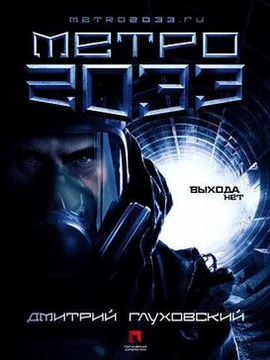
Krasnoselskaya is a metro station in the Moscow underground featured in Metro 2033, the 2010 first-person shooter developed by 4A Games and based on Dmitry Glukhovsky's post-apocalyptic novel. In the game, the station is controlled by the Anabaptists, a fanatical religious faction that treats the tunnels as sacred ground and views outsiders with suspicion and hostility. As part of Artyom's journey through the irradiated subway network, Krasnoselskaya serves as a tense transit point where the player must navigate a claustrophobic, icon-lit environment while confronting armed Anabaptist defenders. The station exemplifies the game's broader theme of fractured humanity in the dark, where ideology and survival collide in narrow tunnel corridors.
- Type
- Metro station (Moscow underground network)
- Controlling faction
- Anabaptists
- First appears
- Metro 2033 (2010)
- Developer
- 4A Games
- Source material
- Metro 2033 novel by Dmitry Glukhovsky
- Status
- Inhabited / Active
Lore & Background
In the world of Metro 2033, the remnants of Moscow's population cling to life in the tunnels of the old metro system. Krasnoselskaya, once an ordinary commuter stop on the city's ring line, has been claimed by the Anabaptists—a sect that interprets the nuclear war as divine judgment and regards the underground as a holy refuge. Their presence transforms the station into something closer to a fortified chapel than a transit hub: walls bear crude religious iconography, and the air carries the smell of tallow candles and damp concrete. The Anabaptists are not a unified army but a collection of fanatics, zealots, and frightened believers who have coalesced around a shared doctrine of purification. They patrol the station and its connecting tunnels with makeshift weapons and a fervor that makes them as dangerous as they are disorganized. Outsiders are met with suspicion at best and violence at worst, and Artyom's passage through Krasnoselskaya is marked by firefights and the oppressive weight of being watched by eyes that see his very presence as sin. The station's architecture retains the broad, vaulted character of Soviet-era metro design, but decades of neglect and the Anabaptists' modifications—stapled banners, stacked sandbags, the glow of oil lamps in place of dead electric fixtures—give it a haggard, almost medieval quality. It is a place where the old world's grandeur has been buried under layers of new, desperate meaning.
In Their Own Story
The tunnel entrance groaned as Artyom shouldered it open, and the cold air that rushed past his face carried the sharp tang of burning fat. Candles. Dozens of them, clustered on a low table at the far end of the platform, their flames guttering in the draft. Beyond them, a figure in a long, patched robe stood motionless, face hidden beneath a hood, watching him with an stillness that felt older than the war. "You walk in holy ground," the voice said, flat and low, barely above the drip of water from the ceiling tiles. "You carry the stink of the surface."
Artyom kept his hands where they could be seen. His finger rested on the trigger of his pistol, but he did not raise it. Not yet. The Anabaptist tilted his head, and in the candlelight the hollows of his cheeks looked carved from stone. Behind him, along the curved wall of the platform, two more figures shifted behind a sandbag barricade, fingers tightening on the grips of shotguns. "I pass through," Artyom said. "I do not stay."
The silence that followed lasted long enough for a candle to gutter and die. Then the hooded man stepped aside, and the way forward opened—narrow, dark, and smelling of iron and old prayers.
Reader's Guide
Krasnoselskaya presents as a mid-sized platform station with the broad, vaulted ceiling typical of Soviet-era metro architecture. The original electric lighting is dead; illumination comes from clusters of oil lamps and tallow candles arranged in rough rows along the platform edges and on small wooden tables. The walls, once tiled in pale ceramic, are now stained with water damage and patched with crude religious banners and hand-painted symbols. The floor is wet in places, and the air is thick with candle smoke and the mineral smell of deep earth. The controlling faction is the Anabaptists, a religious militia that treats the station and its immediate tunnels as consecrated territory. Their soldiers wear long, layered robes over tactical gear, carry a mix of shotguns, rifles, and improvised melee weapons, and patrol in small groups. They are hostile to all non-believers and will open fire without warning if engaged aggressively. The primary encounter in Krasnoselskaya involves Artyom transiting the platform and the connecting tunnel sections while under fire from Anabaptist positions. The layout is relatively linear: the player enters from one tunnel mouth, crosses the platform area where the main firefight occurs, and exits through the opposite tunnel. Watch for Anabaptists flanking from behind sandbag positions and from the platform's upper edge. The area is small enough that cover is limited; use the ticket booths and structural columns to break line of sight. Tunnel connections link Krasnoselskaya to adjacent stations on the ring line, forming part of the broader network Artyom traverses. The tunnels in and out are narrow, dimly lit, and occasionally blocked by rubble or Anabaptist barricades that must be cleared or bypassed.
Did You Know?
- Krasnoselskaya is named after a real station on the Koltsevaya (Ring) Line of the Moscow Metro, and the game preserves the general geography of the real network.
- The Anabaptists who control the station are one of several distinct factions in Metro 2033, each with its own ideology, equipment, and territorial claims across the tunnels.
- In the novel by Dmitry Glukhovsky, the underground stations are described with a similar mix of Soviet architectural grandeur and post-war decay, which 4A Games translated into the game's level design.
- The station's reliance on candle and oil-lamp lighting instead of electricity is consistent with the broader Metro setting, where most surface power infrastructure was destroyed in the nuclear war.
More in World & Locations
Elsewhere in the Metro 2033 universe
Spotted an error? Know more?
This is a living reference — every entry is fact-audited, and reader corrections feed straight into our audit queue. Suggest an edit · See this site's audit record