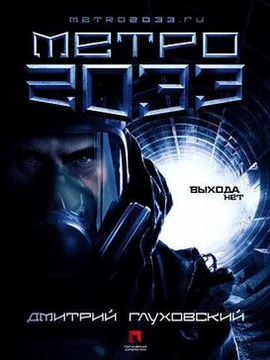
Dvoryanin
A name that echoes the old world's hierarchy in the tunnels of the new one.

Dvoryanin is a minor character referenced within the Metro 2033 universe. The name, drawn from the Russian word for 'nobleman' or 'aristocrat' (дворянин), functions as a title or epithet rather than a given name, consistent with the way many underground dwellers are identified by their social role or station hierarchy rather than a personal name. The character occupies a peripheral position in the broader narrative and is not a central figure in the main plotlines of the novels or the 4A Games video game adaptations.
- Franchise
- Metro 2033
- Type
- Minor / background character
- Naming convention
- Russian title/epithet (дворянин – 'nobleman')
- Medium
- Novel series and/or game adaptations (exact first appearance unconfirmed)
Lore & Background
In the Metro 2033 setting, the underground stations have developed their own rigid social structures over decades of isolation. Titles and epithets carry weight far beyond their literal meaning; a name like Dvoryanin invokes the pre-war aristocratic order that the surface once knew, a ghost of civilization pressed into the mouths of people who have never seen the sky. Such names are less about bloodline and more about function—who holds authority, who dispenses rations, who decides who gets a bed and who gets the corridor. The character's specific narrative role remains limited in the wider canon. They do not drive the central conflict between the Red Line, the Black Line, or the D6 station, nor do they appear in the pivotal confrontations that define Artyom's journey. What the name carries, however, is the weight of a world that no longer exists—every reference to 'dvoryanin' in the tunnels is a small, bitter joke about rank, privilege, and the arbitrary lines that separate the fed from the hungry in a station where the ceiling is a few meters of compacted earth. Because the character is peripheral, detailed biographical information—specific station affiliation, personal relationships, ultimate fate—is not firmly established in the widely circulated canon. Treat any highly specific claims about their arc with caution.
In Their Own Story
The air in the lower corridor tasted of rust and boiled cabbage. Dvoryanin stood at the end of the line, not because he was tall, but because the others had decided, years ago, that he would always be at the end. A child tugged her mother's sleeve and whispered the name like a curse. He did not turn. He never turned. Above them, three meters of frozen Moscow pressed down, and the distant groan of the station's ventilation system sounded, to him, like the breathing of something vast and indifferent. He counted the seconds between the groans. Fourteen. Always fourteen. It was the only arithmetic that still meant something down here.
Reader's Guide
Name: Dvoryanin (дворянин) Role: Minor / background figure; title or epithet rather than a personal name Station or faction affiliation: Not firmly established in widely available canon sources; the name implies a connection to station hierarchy or a self-appointed social rank Key relationships: No confirmed central relationships in the main narrative threads First appearance: Unconfirmed in the widely circulated novel or game canon; treat specific chapter or level references with caution
Narrative summary: Dvoryanin functions as a texture of the Metro world rather than a driver of plot. The character embodies the way the underground stations replicate, in miniature and in decay, the social stratifications of the surface they can no longer reach. The name itself is the story: a word for 'nobleman' spoken in a place where the nearest aristocracy is a station chief who hoards canned peaches. The character's arc, insofar as one can be identified, is the slow erosion of meaning attached to old titles in a world that has forgotten what they once signified. There is no grand confrontation, no redemption, no final speech. There is only the corridor, the line, and the fourteen-second groan of the vents overhead. The character's fate, if one is stated, is absorbed into the general fate of the station's population—survival, or its absence—without the narrative pausing to mark the difference.
Did You Know?
- The word 'dvoryanin' (дворянин) historically referred to the hereditary nobility of the Russian Empire; in the Metro setting it is repurposed as a bitter, ironic title in a society that has no empire left.
- Metro 2033 characters are frequently identified by role, epithet, or station designation rather than by a full personal name, reflecting the utilitarian culture of the underground stations.
- The Metro 2033 universe was created by Russian author Dmitry Glukhovsky, whose novel first published in 2002 established the core setting of post-nuclear Moscow's metro system.
- The 4A Games video game adaptations (Metro 2033, Metro: Last Light, Metro Exodus) expand the novel's world but retain its core principle: the stations are closed, claustrophobic societies where social titles carry outsiz
Elsewhere in the Metro 2033 universe
Spotted an error? Know more?
This is a living reference — every entry is fact-audited, and reader corrections feed straight into our audit queue. Suggest an edit · See this site's audit record