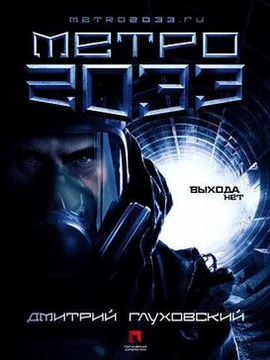
Moscow Metro Authority
Order in the dark is maintained by the hand that holds the torch.

The Moscow Metro Authority is the authoritarian governing body of the central Moscow Metro in the post-apocalyptic world of Metro 2033 and Metro: Last Light. Composed of political administrators, military officers, and propaganda operatives, the Authority maintains rigid control over the central stations, enforcing order through surveillance, censorship, and armed force. They present themselves as the sole legitimate government of the surviving metro communities. In the games developed by 4A Games, the Authority serves as one of the three principal factions the player encounters, alongside the anarchist-communist Redline and the mutant Dark Ones. Their relationship with the player is shaped by the choices made throughout the campaign, and their ultimate fate is not fixed.
- Type
- Faction / Government body
- Ideology
- Authoritarian centralism
- Territory
- Central Moscow Metro stations
- First appears
- Metro 2033 (2010)
- Also appears in
- Metro: Last Light (2013)
- Primary rivals
- Redline, Dark Ones
- Developer
- 4A Games
Lore & Background
Before the nuclear war, the Moscow Metro was a transit system. After the war, it became a nation. The Authority emerged from the political structures that survived in the central stations, consolidating power around the idea that survival demanded hierarchy, rationing, and a single voice. Their ideology is one of controlled scarcity: they manage food, medicine, and fuel with an iron hand, and they frame every restriction as protection against the chaos that the surface and the outer tunnels represent. Their propaganda apparatus is extensive. Paintings, loudspeaker announcements, and public executions serve to reinforce the narrative that the Authority is the only barrier between the metro and annihilation. Dissent is treated as a security threat, and the Redline's calls for a return to the surface are dismissed as suicidal idealism. The Authority's military, drawn from station guards and armed officers, patrols the central corridors and enforces curfews and checkpoints. In Metro: Last Light, the Authority's grip is tested. Internal divisions and the shifting balance of power among the three factions create a more volatile political landscape. The Authority still commands the central infrastructure, but its legitimacy is increasingly contested, and the player's actions can tip the balance toward or against their continued rule.
In Their Own Story
The fluorescent tubes above the Park Kultury platform flicker and die one by one, plunging the concourse into a grey half-light. A guard in a patched uniform stands at the checkpoint, his rifle slung low, eyes scanning the stream of commuters for the hundredth time that shift. Behind him, a painted mural shows a stern face above the words ORDER IS LIFE, the paint peeling at the edges where the humidity seeps in from the tunnels. A woman with a child presses a ration card into his hand; he stamps it without looking up. Somewhere deeper in the station, a loudspeaker crackles to life, feeding a calm, measured voice into the dark. The woman whispers to her child, 'Don't listen. Walk.' The guard's eyes flick toward them for a half-second, then return to the crowd. The stamp goes down again. The next card. The next. The dark beyond the platform edge waits, patient and indifferent, for the Authority to decide who gets to live another day underground.
Reader's Guide
The Moscow Metro Authority governs the central stations of the Moscow Metro with an authoritarian hand. Their ideology centres on centralised control, rationed resources, and the suppression of dissent. They view the surface as uninhabitable and the outer tunnels as lawless, and they frame their rule as the only viable path to survival. Territorially, the Authority holds the central corridor of the metro network, including the major interchange stations. Their checkpoints, guard posts, and propaganda installations mark the boundaries of their control. Beyond those lines, the Redline's anarchist communes and the Dark Ones' mutant territories press inward. Key figures include political directors and military commanders who administer the stations, though their individual names and roles shift depending on the player's choices. The Authority's armed forces are the primary military power in the central metro, outnumbering and out-equipping the Redline's guerrilla fighters. Alliances and rivalries define the Authority's position. They are in open, often violent conflict with the Redline, whose calls for a democratic return to the surface the Authority treats as sedition. Their relationship with the Dark Ones is more complex: the Authority sees the mutants as a biological threat to be contained or destroyed, while the Dark Ones view the Authority's centralisation as a form of oppression. In Metro: Last Light, the Authority's internal stability is further strained, and the player's actions can determine whether the Authority endures, collapses, or is overthrown.
Did You Know?
- The Authority is one of three major factions in Metro 2033, alongside the Redline and the Dark Ones, and the player's choices determine which faction ultimately prevails.
- The Authority's propaganda is a recurring visual motif throughout the games, appearing as painted murals, loudspeaker broadcasts, and public displays in the central stations.
- In Metro: Last Light, the political dynamics shift significantly, and the Authority's hold on power is no longer guaranteed, reflecting the novel's more ambiguous ending.
- The Authority's control is enforced through checkpoints and armed patrols in the central metro, creating a stark contrast with the lawless outer tunnels and the Redline's communes.
More in Factions & Groups
Elsewhere in the Metro 2033 universe
Spotted an error? Know more?
This is a living reference — every entry is fact-audited, and reader corrections feed straight into our audit queue. Suggest an edit · See this site's audit record