Post-apocalyptic survival horror
Beneath a dead sky, every bullet is a choice.

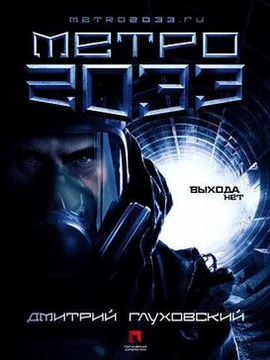
Post-apocalyptic survival horror is a subgenre of survival horror video games that emphasizes resource scarcity, environmental danger, and psychological tension in the aftermath of a societal collapse. In the context of the Metro 2033 franchise, this genre is embodied by the player's struggle to survive in the Moscow Metro system and the irradiated surface above, where ammunition serves as currency and mutants lurk in the darkness. But it's more than just scavenging and shooting — it's a constant, gnawing calculus of risk versus need, where every bullet spent is a potential meal forgone, and every breath of surface air is a countdown to suffocation.
- Genre
- First-person shooter, survival horror
- Setting
- Post-apocalyptic Moscow Metro and surface
- Core Mechanic
- Resource management (ammo as currency, filters, medkits)
- Primary Antagonists
- Mutants, hostile human factions, supernatural anomalies
- Key Item
- Gas mask and filters
- Atmosphere
- Claustrophobic, tense, morally ambiguous
Lore & Background
The post-apocalyptic survival horror of Metro 2033 is rooted in the aftermath of a nuclear war that devastated the world in 2013. Survivors retreated to the Moscow Metro, a vast network of tunnels that became a patchwork of city-states, each with its own ideology and dangers. The surface remains irradiated and infested with mutated creatures, while the tunnels harbor political intrigue, cults, and supernatural phenomena known as 'the anomalies.'
Resource scarcity defines every encounter. Bullets are both weapons and currency, forcing the player to choose between fighting and trading. Filters for the gas mask are a constant concern, limiting time spent on the surface. Medkits are rare, and healing is slow. This creates a tension where every engagement must be weighed against potential loss. The genre's horror comes not only from mutants but from the human condition—desperation, betrayal, and the loss of humanity. The Dark Ones, a mysterious psychic species, represent an existential threat that challenges the player's understanding of survival and morality. They are not just monsters to be shot; they are a mirror held up to the player's own soul, asking whether survival is worth the cost of your conscience.
In Their Own Story
The tunnels hum with a low, constant vibration. My last filter ticks down—ten minutes of air left. A group of bandits ahead, arguing over a cache of canned food. I could fight, but each bullet spent is a bullet I can't use to buy a new filter at the next station. I crouch in the shadow of a broken train car, listening to my own breath. The darkness is alive with sounds: the drip of water, the skitter of claws. I decide to wait. They'll leave eventually. They always do. And if they don't, I'll have to make a choice I might not survive. That's the real horror of the Metro — not the mutants in the dark, but the quiet arithmetic of desperation that runs through every decision.
Reader's Guide
Metro 2033 was developed by 4A Games, a Ukrainian studio founded by former developers of S.T.A.L.K.E.R.: Shadow of Chernobyl. The game is based on the novel of the same name by Dmitry Glukhovsky. Critically, Metro 2033 was praised for its atmospheric world-building, immersive survival mechanics, and narrative depth, though it received some criticism for its linearity and occasionally inconsistent AI. It has since become a cult classic, often cited as a benchmark for post-apocalyptic survival horror. The game's success spawned two sequels: Metro: Last Light (2013) and Metro Exodus (2019), which expanded the setting beyond the Metro tunnels and onto the surface of a continent slowly reclaiming itself from the ashes.
Did You Know?
- The game's ammunition-doubles-as-currency mechanic was inspired by real-world barter systems in post-Soviet states during economic collapse.
- The developers used a custom engine called the 4A Engine, which was designed to handle dynamic lighting and volumetric fog for atmospheric effect.
- The novel's author, Dmitry Glukhovsky, was initially skeptical of a video game adaptation but later became a consultant on the project.
- The game features multiple endings based on the player's moral choices, a mechanic carried into later entries.
More in Development & Legacy
Elsewhere in the Metro 2033 universe
Spotted an error? Know more?
This is a living reference — every entry is fact-audited, and reader corrections feed straight into our audit queue. Suggest an edit · See this site's audit record