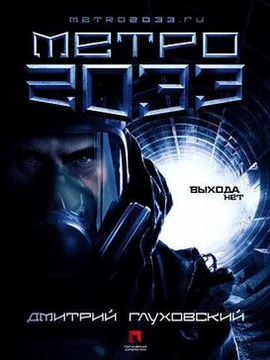
The Spiders' colony
In the dark below the last light, the only law is the hunger.

The Spiders are a feral, cannibalistic group of survivors dwelling in the deep, unlit tunnels of the Moscow Metro. Unlike the organized station-based factions of the surface, they have abandoned all social structure and subsist by preying on other humans who wander into their territory. They are encountered by the protagonist as a direct, visceral threat in both Dmitry Glukhovsky's novel and the 4A Games video game adaptations. They hold no political ideology, claim no station, and recognize no authority. Their 'colony' is less a settlement than a den: a stretch of collapsed and abandoned tunnel where they lurk, feed, and repel any intruder. In the broader conflict of Metro 2033 they serve as a reminder that the tunnels remain a lethal, lawless space even after the war above has ended.
- Type
- Feral cannibal group
- Territory
- Deep tunnels of the Moscow Metro (no station)
- Affiliation
- None – independent of Red, White, or other factions
- Leader
- A dominant figure referred to as the Spider
- First appears
- Metro 2033 (novel, 2002; game, 2010)
- Disposition
- Hostile to all other survivors
Lore & Background
Before the war, the tunnels were maintenance arteries—service passages, ventilation shafts, and abandoned branches of the Moscow Metro. After the nuclear exchanges, small groups of survivors retreated into these spaces. Most eventually reorganized around a station or a bunker. The Spiders did not. Over years of isolation, starvation, and psychological breakdown, a cluster of people in the deep tunnels lost the social contracts that held the rest of Metro society together. They became predators, feeding on anyone foolish enough to pass through their section of tunnel. Their appearance is gaunt and degraded; they move in packs, using the darkness and the geometry of the tunnels to ambush. They do not build, trade, or govern. Their 'colony' is a tangle of debris, old track, and the remains of their victims. The dominant individual among them—referred to simply as the Spider—asserts control through brute strength and the group's shared dependency on the hunting ground it has claimed. In the narrative of Metro 2033, the Spiders represent the worst-case trajectory of post-apocalyptic survival: the complete collapse of empathy and community into raw, animal predation. They are not evil in a political or ideological sense; they are simply beyond the point of return. The protagonist must fight through their territory, and the encounter is framed less as a battle between factions and more as a human confronting something that has ceased to be fully human.
In Their Own Story
The flashlight beam cut a pale cone through the black. Artyom's boots crunched on shattered tile, each step echoing off wet concrete. The tunnel narrowed. The air thickened with a sweetness he could not name—copper and rot. He heard breathing ahead, wet and ragged, more than one pair of lungs. A shape peeled off the wall, fingers long and black-nailed, and it did not speak. It only tilted its head, tasting the dark, and then the others came from everywhere at once, a chittering tide of teeth in the silence. The Spider watched from a ledge above, patient as stone, and the tunnel went very, very quiet.
Reader's Guide
The Spiders are not a political faction. They have no manifesto, no elected leadership, no trade agreements. Their single driving force is predation: they hunt, kill, and consume other survivors who enter their stretch of deep tunnel. Their 'ideology' is the absence of ideology—years of isolation in the dark have stripped them of social structure, leaving only pack-hunting instinct and a dominant alpha. Territorially, they do not control any named station. Their domain is a section of the deep maintenance tunnels, the kind of space that appears on no civilian map. They use the darkness, the narrow passages, and the disorientation of the tunnels to ambush. They are not found at a platform or a gate; they are found in the dark between. Key members are limited to the dominant leader, the Spider, and the pack of gaunt, feral individuals who follow. They have no named officers, no council, no hierarchy beyond strength. Alliances: none. Rivalries: effectively with every other group, since any survivor passing through their tunnel is prey. They do not negotiate, trade, or form pacts. In the central conflict of Metro 2033, they function as a neutral, environmental hazard—a lethal obstacle the protagonist must overcome rather than a faction whose goals can be reasoned with.
Did You Know?
- The Spiders have no station, no gate, no political banner; their entire 'territory' is an unlit stretch of deep tunnel that appears on no civilian map.
- They are not allied with either the Red or White faction and recognize no authority above their own pack.
- In both the novel and the game, the encounter with the Spiders is framed as a survival horror set-piece rather than a faction-based military conflict.
- Their cannibalism is presented as the endpoint of prolonged isolation and psychological collapse, not as a chosen ideology.
More in Factions & Groups
Elsewhere in the Metro 2033 universe
Spotted an error? Know more?
This is a living reference — every entry is fact-audited, and reader corrections feed straight into our audit queue. Suggest an edit · See this site's audit record