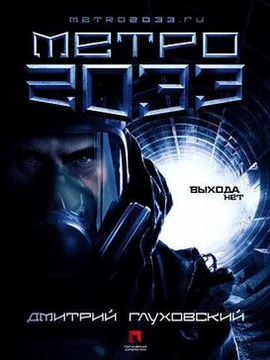
The Stalkers
Scavengers of the Zone, bound by survival rather than ideology.

The Stalkers are a loose collective of survivors and scavengers who operate in the radioactive, mutant-infested tunnel network known as the Zone beneath Moscow. They are neither a military force nor a political faction but a pragmatic survival group that scavenges for food, ammunition, and trade goods in the most dangerous stretches of the underground. In the Metro 2033 video game, they represent the civilian survival element of the world, standing in contrast to the Red Army's military discipline and the Bandits' outright lawlessness. Led by a former officer named Yuri, the Stalkers hold Prospekt Mira station as their base. They are wary of outsiders, trade when it suits them, and will turn hostile if provoked. Their knowledge of the Zone's tunnels, mutant behavior, and safe routes makes them invaluable allies—or dangerous enemies—depending on the player's choices.
- Leader
- Yuri
- Base of operations
- Prospekt Mira station
- Type
- Scavenger / survivor collective
- First appears
- Metro 2033 (2010)
- Affiliation
- Independent (Zone)
- Developer
- 4A Games
Lore & Background
The Stalkers are not an organization in any formal sense. There is no charter, no recruitment drive, no uniform. They are people who decided that the tunnels beyond the military checkpoints were worth the risk, and who formed a rough mutual-aid network out of necessity. Yuri, a former military officer who lost his unit in the Zone, became their de facto leader not through a coup but because he knew the tunnels, could read the signs of a mutant den, and made the hard calls about who to trust at a crossroads. Their ideology is stripped to its barest core: survive, trade, do not provoke. They do not care about the surface, about politics, about the Red Army's plans. They care about the next meal, the next working cartridge, the next safe passage through a tunnel that might be crawling with dogs or blinders. This pragmatism makes them unpredictable to the more ideologically driven factions. They will trade with a Red Army patrol one day and shoot at a Bandit the next, guided solely by self-interest and the memory of past slights. In the broader Metro universe, the Stalkers occupy a middle ground. They are not the organized military of Park Kultury, nor the nihilistic raiders of Krasnoselskaya. They are the people who simply want to live in the dark, and their existence underscores a central theme of the franchise: that in the Zone, the only law that matters is the one you write for yourself each morning.
In Their Own Story
The tunnel was dark the way only a dead city can be dark—not the absence of light but the presence of something that swallowed it. Yuri pressed his back against the concrete wall, listening. Three Stalkers huddled behind him, their gas masks fogged, their hands white-knuckled on pistol grips. Somewhere ahead, the dripping water had changed pitch. Not the slow metronome of a dry shaft. The wet, rhythmic slapping of something large moving through a flooded passage. "We wait," Yuri said. His voice was flat, the voice of a man who had made this call forty times already. "We do not move until it passes."
One of the younger ones whispered a question. Yuri did not turn. He watched the water ahead, watched the ripples that should not have been there, and counted the seconds between each wet slap until the rhythm faded into the general groan of the tunnel. Then he raised a fist. One by one, they moved forward, boots silent on the wet concrete, into the dark that had no name.
Reader's Guide
The Stalkers are a scavenger collective based at Prospekt Mira station, operating deep in the Zone where the tunnels are uncharted, irradiated, and patrolled by mutants. Their ideology is purely survivalist: they do not seek to conquer, govern, or even expand. They seek to eat, to trade, and to stay alive. Yuri, their leader, is a former military officer who fell out of the Red Army's structure and built a small community of outcasts, deserters, and desperate civilians who chose the Zone over the checkpoints. They control the tunnels radiating from Prospekt Mira, though "control" is generous. They know the safe routes, the locations of mutant dens, and which passages are passable in a given season. This knowledge is their currency. They trade scavenged supplies, information, and safe-passage guidance with the Red Army and, when it is profitable, even with the Bandits. They hold no formal alliance with either faction and will turn on any of them if the math of survival demands it. In the central conflict of Metro 2033, the Stalkers serve as the player's first major non-military encounter. The player can choose to trade with them, fight them, or walk past. Their treatment of the player reflects the game's broader theme: in the Zone, there are no fixed allies, only shifting calculations of risk and reward. They are the human face of the underground, the reminder that not everyone down here is a soldier or a raider—some are just trying to make it to the next meal.
Did You Know?
- The Stalkers' name and concept originate from Dmitry Glukhovsky's 2002 novel Metro 2033, where they are a key group operating in the Zone tunnels.
- In the 2010 video game, the Stalkers are one of several distinct factions the player encounters, alongside the Red Army (Park Kultury) and the Bandits (Krasnoselskaya), each with its own station and goals.
- The Stalkers are not a single unified army; they are a loose network of individuals who coordinate loosely under Yuri's leadership, making their behavior in the game more reactive and less scripted than the military fact
- The Zone itself—the tunnel network the Stalkers operate in—is characterized by radiation, mutated creatures, and unstable infrastructure, making every expedition a risk that the Stalkers mitigate through local knowledge
More in Factions & Groups
Elsewhere in the Metro 2033 universe
Spotted an error? Know more?
This is a living reference — every entry is fact-audited, and reader corrections feed straight into our audit queue. Suggest an edit · See this site's audit record