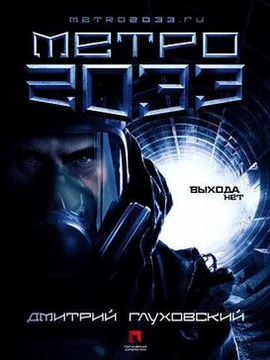
Metro: Last Light Redux (2014)
A remastered descent into moral ambiguity beneath a dead world.

Released alongside Metro 2033 Redux as the combined Metro Redux bundle, it brought the 2013 first-person shooter to next-generation consoles (PlayStation 4, Xbox One) and an updated PC build with enhanced visuals and additional content. As the second major installment in the Metro game series, Last Light Redux carries forward Artyom's story from the tunnels of Moscow into the irradiated surface world. Its development and subsequent legacy cemented 4A Games' reputation for atmospheric, morally weighted post-apocalyptic storytelling and helped define the tone of the broader franchise, culminating in Metro Exodus (2019).
- Developer
- 4A Games (Kyiv, Ukraine)
- Publisher
- Deep Silver (Koch Media)
- Engine
- 4A Engine
- Platforms
- PC, PlayStation 4, Xbox One
- Protagonist
- Artyom
- Source material
- Metro: Last Light (2013) / Dmitry Glukhovsky's Metro universe
Lore & Background
In the world of Metro, the last survivors of humanity huddle in the tunnels of the Moscow Metro after a nuclear war and a subsequent alien invasion left the surface poisoned and overrun by mutated creatures. Artyom, a young guard from the Vorobyonovy station, has already survived the horrors of the 2033 campaign and now faces a new threat: the New People, a zealous surface-dwelling cult who believe the apocalypse is a divine cleansing and who seek to eliminate all remaining 'sinners' in the metro. Metro: Last Light Redux presents this narrative with the same claustrophobic tension as its predecessor but expands the scope dramatically. Artyom ventures above ground for the first time in the series, navigating irradiated forests, abandoned cities, and the New People's fortified settlements. The game's moral framework—where killing or sparing civilians, mutants, and enemies carries narrative weight—distinguishes it from the more survival-focused 2033. The Redux edition preserves these choices while wrapping them in upgraded lighting, higher-resolution textures, and refined audio design. The Redux release also served as a technical showcase for the 4A Engine, demonstrating how the studio could push dynamic lighting, volumetric fog, and detailed environmental storytelling on next-gen hardware. It became the definitive presentation of the Last Light story for many players and the logical bridge into Metro Exodus, where Artyom's journey finally extends beyond Moscow.
In Their Own Story
The gas mask seals tight against Artyom's jaw, the filter clicking softly with each breath. Above, the sky is a bruised amber—no sun, only the perpetual haze of fallout and ash. He crouches behind a rusted bus, the New People's chanting drifting down from the hillside like a hymn written in static. His hands tremble on the lever-action rifle. A child's voice cuts through the chant, small and lost. He lowers the weapon. In the metro, they told him the surface was mercy. Up here, mercy is just another word for a choice you can't take back. He exhales through the mask. The fog swallows the road ahead, and he walks into it.
Reader's Guide
For 4A Games, the project was less a ground-up rework than a targeted enhancement pass: higher-resolution textures, improved global illumination, refined particle effects, and updated audio mixing for surround sound on PS4 and Xbox One. The studio also added minor gameplay refinements and ensured the two titles could be played in a combined sequence, reinforcing the narrative continuity between Artyom's first and second campaigns. A key creative decision carried over from the original 2013 release was the moral-choice system. Unlike 2033, where survival was the singular imperative, Last Light asked players whether to kill or spare NPCs—civilians, mutants, even enemy soldiers. The Redux edition preserved this framework, and 4A has spoken publicly about how the system was designed to make violence feel consequential rather than mechanical. This philosophy became a signature of the franchise. Compared to Dmitry Glukhovsky's source novels, the games take considerable liberties. The New People, while inspired by the religious factions in the books, are a more structured and visually distinct antagonist group in the games. The surface world is rendered with a cinematic, almost painterly quality that the novels describe in more spare, literary terms. These adaptations proved successful and set the visual and tonal template for Metro Exodus. The Redux release also had a practical legacy: it introduced a large new audience to the Metro universe on next-gen hardware, building the player base that would support the 2019 Exodus launch. For post-apocalyptic gaming more broadly, it reinforced the idea that a first-person shooter could be a character-driven, morally complex experience without sacrificing tension or atmosphere.
Did You Know?
- 4A Games is based in Kyiv, Ukraine, and the Metro series has become one of the most internationally recognized video game franchises to come out of the country.
- The moral-choice system in Metro: Last Light—where sparing or killing NPCs alters dialogue and later encounters—was a deliberate departure from the pure survival focus of Metro 2033 and became a defining feature of the f
- Metro: Last Light Redux and Metro 2033 Redux were sold together as the Metro Redux bundle, encouraging players to experience both campaigns in sequence for a continuous narrative arc.
- The 4A Engine, used throughout the Metro games, is a proprietary engine developed in-house by 4A Games, allowing the studio tight control over lighting, atmosphere, and environmental rendering.
More in Development & Legacy
Elsewhere in the Metro 2033 universe
Spotted an error? Know more?
This is a living reference — every entry is fact-audited, and reader corrections feed straight into our audit queue. Suggest an edit · See this site's audit record