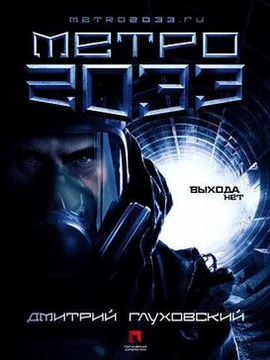
Dmitry Glukhovsky
The man who gave the Metro its soul—and the monsters their shadows.

Dmitry Glukhovsky is the Russian author of the 2002 post-apocalyptic fiction novel *Metro 2033*, which was published in print in 2005 by Eksmo and became a nationwide and worldwide bestseller. The novel is set within the Moscow Metro, where the last survivors hide after a global nuclear holocaust. It has been followed by two sequels, *Metro 2034* and *Metro 2035*, and spawned the Metro media franchise. The book's English edition was published as a tie-in with its video game adaptation in 2010. Glukhovsky was awarded the Encouragement Award of the European Science Fiction Society at the Eurocon for *Metro 2033* in 2007.
- Role
- Author, creator of the Metro universe
- Affiliation
- Independent writer, collaborator with 4A Games
- First appears
- Metro 2033 novel (2002/2005)
- Status
- Active, living author
Verified Timeline
Lore & Background
Dmitry Glukhovsky created the Metro universe with his novel *Metro 2033*, first appearing online in 2002 and later printed in 2005. The story is set in the Moscow Metro after a 2013 nuclear war forced survivors to relocate underground. Factions emerged, including the neo-Stalinist Red Line, the neo-Nazi Fourth Reich, the powerful Polis, and the economic alliance Hansa. The protagonist, Artyom, journeys through the metro to deliver a warning about the Dark Ones, mysterious creatures inspiring terror. Glukhovsky's sequels *Metro 2034* (2009) and *Metro 2035* continue the narrative. The video game adaptation *Metro 2033*, developed by Ukrainian studio 4A Games, was released worldwide in 2010, with Glukhovsky choosing a video game adaptation over a film for more artistic freedom. Two sequels, *Metro: Last Light* (2013) and *Metro Exodus* (2019), were also developed by 4A Games. A VR spinoff, *Metro Awakening*, was released in 2024 by Vertigo Games. Glukhovsky was in talks with Hollywood studios for a film adaptation, but MGM's project was canceled after he refused to have the film set in Washington instead of Moscow. In 2019, a Russian film adaptation was announced for a 2022 release, directed by Egor Baranov, but was delayed to 2024 and later canceled indefinitely after Glukhovsky was blacklisted by the Russian government following his comments on the arrest of Alexei Navalny and the Russian invasion of Ukraine.
In Their Own Story
The writer sits in a dim room, the glow of a monitor casting long shadows across stacks of old Soviet maps and dog-eared notebooks. Outside, the Moscow night hums with traffic and distant sirens—but his mind is elsewhere, deep beneath the earth, where the only light comes from rusted bulbs and the faint bioluminescence of mutated fungi. He remembers the claustrophobic tunnels, the flickering emergency lamps, the way a whisper carries for half a kilometer. A character named Artyom walks through his thoughts—not as a hero, but as a boy who learned to shoot before he learned to cry. The writer types a single line: 'The world ended, but we did not.' He pauses, listening to the silence of his own apartment, and hears the drip of condensation from a pipe that isn't there. Somewhere, in a game studio in Kyiv, another team is building that world, brick by digital brick, coding the rust on a handrail, the echo of a monster's growl. He smiles. The metro is no longer just his—it belongs to everyone who dares to descend, controller in hand, breath held.
Reader's Guide
4A Games, a Ukrainian studio, developed the first-person shooter video game *Metro 2033*, released worldwide in 2010. Glukhovsky said he chose a video game adaptation over a film as it gave him more artistic freedom. Two sequels also developed by 4A Games, *Metro: Last Light* (2013) and *Metro Exodus* (2019), were released. A VR exclusive spinoff, *Metro Awakening*, was released in 2024 developed by Vertigo Games. By 2010, over 500,000 copies of *Metro 2033* had been sold in Russia alone, and over 2 million had read the book on its official site before it was published in print. Foreign book rights have been sold to dozens of countries. Glukhovsky was awarded the Encouragement Award of the European Science Fiction Society at the Eurocon for *Metro 2033* in 2007.
Did You Know?
- Over 2 million people read *Metro 2033* on its official website before it was ever published in print.
- Glukhovsky was awarded the Encouragement Award of the European Science Fiction Society at the Eurocon in 2007 for *Metro 2033*.
- The English edition of *Metro 2033* was released on 18 March 2010 specifically to coincide with the video game adaptation.
- Glukhovsky chose a video game adaptation over a film because he felt it gave him more artistic freedom.
- A film adaptation was canceled after Glukhovsky refused to have the story moved from Moscow to Washington, D.C., saying 'In Washington DC, Nazis don't work, Communists don't work at all, and the Dark Ones don't work.'
Career and Publication History
Dmitry Glukhovsky's novel *Metro 2033* first appeared online in 2002 and later became an interactive experiment, drawing in thousands of readers from around Russia and abroad. In 2005, it was printed by Eksmo and became a nationwide and worldwide bestseller. The English edition was released on 18 March 2010 to coincide with the release of the video game adaptation. By 2010, over 500,000 copies had been sold in Russia alone, and over 2 million had read the book on its official site before print publication. Foreign book rights have been sold to dozens of countries. In 2007, Glukhovsky was awarded the Encouragement Award of the European Science Fiction Society at the Eurocon for *Metro 2033*. The novel has been followed by two sequels, *Metro 2034* (2009) and *Metro 2035*, and spawned the Metro media franchise.
World Building and Setting
The narrative is set within the Moscow Metro after a 2013 nuclear war forced a large amount of Moscow's surviving population to relocate to the city's Metro system. Communities settled within underground train stations and developed into independent states over time. Factions emerged: the independent peacekeepers the 'Rangers of the Order', the neo-Stalinist Red Line, the neo-Nazi Fourth Reich, Polis (which contained the greatest military power and most knowledge of the past), and the Commonwealth of Ring Stations (Hansa), which controlled the main ring through economic power. The Red Line and Fourth Reich entered a state of war. Stations that refused to join were demolished, merged into Hansa, raided by bandits, or formed independent states. Some stations were destroyed by animals mutated by nuclear fallout. The station VDNKh is where the events of *Metro 2033* unfold.
Narrative Arc and Protagonist
The protagonist is a 24-year-old man named Artyom, born before the nuclear war. He was saved from carnivorous rats that killed his mother by Sukhoi, a military officer who raised him as his son. Artyom meets Hunter, who discusses the threat of the Dark Ones attacking VDNKh. Artyom confesses that 10 years earlier, he and a friend went to the surface at Botanical Gardens and failed to seal the exit, allowing the Dark Ones to enter. Hunter tasks Artyom with delivering a message to Melnik at Polis if he does not return. Artyom journeys through the metro, facing dangers including the death of his companion Bourbon by a psychic force, guidance from a mystic named Khan, capture by the Fourth Reich, and rescue by revolutionary fighters. He reaches Polis and delivers his message. The Brahmins offer a solution in exchange for help recovering a sacred book. Artyom travels to the surface with Melnik and Daniel, entering a library attacked by 'librarians' (mutated creatures). Daniel is mortally wounded but gives Artyom directions to a missile silo. Artyom and Melnik later become involved in a search for a missing child, Oleg, and are abducted by cannibals worshipping 'The Great Worm'. They escape into Metro-2, a secret tunnel system leading to the missile site. The team passes through a station containing a mutated bio-weapon that kills several, including Oleg. Artyom reaches Ostankino Tower to provide targeting coordinates. As missiles fall, Artyom has a vision realizing the Dark Ones were trying to make peaceful contact, and he tears off his mask in tears, heading back home.
Franchise Expansion and Legacy
The novel *Metro 2033* has been followed by two sequels, *Metro 2034* and *Metro 2035*, and spawned the Metro media franchise. The English edition was published as a tie-in with its video game adaptation in 2010. The video game *Metro 2033*, developed by Ukrainian studio 4A Games, was released worldwide in 2010. Two sequels, *Metro: Last Light* (2013) and *Metro Exodus* (2019), were also developed by 4A Games. A VR exclusive spinoff, *Metro Awakening*, was released in 2024 developed by Vertigo Games. Film projects were attempted: MGM picked up screen rights in 2012 but the production was canceled after Glukhovsky refused to have the film Americanized and set in Washington. In 2019, a Russian film adaptation was announced for a 2022 release, directed by Egor Baranov, but was delayed to 2024 and later canceled indefinitely after Glukhovsky was blacklisted by the Russian government following his comments on the arrest of Alexei Navalny and the Russian invasion of Ukraine.
Frequently Asked Questions
Who is Dmitry Glukhovsky?
He is the Russian novelist responsible for originating the dark, underground world where humanity survives after a nuclear catastrophe. His literary work serves as the primary source material that spawned the entire Metro franchise.
What role did he play in creating the games?
Glukhovsky worked closely with 4A Games to guide the story direction and maintain consistency with his written lore. Despite this collaboration, the interactive narratives frequently branch away from the specific events of his novels.
When was the first Metro novel published?
His debut entry into this series was the novel Metro 2033, originally written in 2002 before being released to readers in 2005. This book introduced the setting of Moscow's subway system as a shelter for survivors.
Is Dmitry Glukhovsky still alive?
Glukhovsky remains alive and continues to write today, keeping the literary side of the franchise evolving. He maintains his position as the original creator while observing how his world adapts across different media.
Why is he considered important to the Metro community?
He is credited with establishing the factions and atmospheric horror that define the series' unique identity. His initial vision is what allows fans to connect deeply with both the books and their game adaptations.
More in Development & Legacy
Elsewhere in the Metro 2033 universe
Spotted an error? Know more?
This is a living reference — every entry is fact-audited, and reader corrections feed straight into our audit queue. Suggest an edit · See this site's audit record