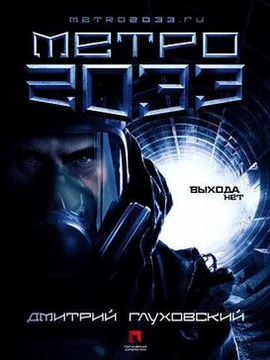
Metro 2033 Redux (2014)
The tunnels remember. The Redux makes you feel every breath of poisoned air.

It re-released the original 2010 experience with upgraded visuals, higher-resolution textures, improved lighting, and a photo mode, while preserving the story, level design, and gameplay of the original. The Redux build was packaged alongside Metro: Last Light Redux as a combined bundle, bringing both entries to PlayStation 4, Xbox One, and PC. As the second major presentation of the franchise's opening chapter, Redux served as a bridge between the original 2010 release and the full sequel Metro Exodus (2019), reaffirming the series' identity as a grounded, resource-scarce survival shooter set in the tunnels of a post-nuclear Moscow.
- Developer
- 4A Games
- Publisher
- Deep Silver
- Protagonist
- Artyom
- Source material
- Metro 2033 novel by Dmitry Glukhovsky (2002)
- Platforms
- PC, PlayStation 4, Xbox One
- Genre
- First-person survival shooter
Lore & Background
In the world of Metro 2033, a nuclear war has rendered the surface of Moscow a irradiated wasteland. Humanity survives in the sprawling network of the city's metro system, where stations have become isolated, often hostile communities. Artyom, a young guard of the Dabrovka station, is sent on a desperate mission to the neighboring Polinka station to retrieve a mysterious stranger and his dog, only to discover that the threat above ground is far worse than radiation: a faction of survivors has begun a genocidal campaign against the other stations. The narrative is told through Artyom's fragmented, unreliable journal entries, blurring the line between confirmed events and trauma-driven delusion. The Redux presentation does not alter this story but renders its claustrophobic corridors, flickering lantern light, and the ever-present dread of running out of cartridges with greater visual fidelity, making the underground feel more oppressive and real. The setting draws directly from Glukhovsky's novel, which itself was inspired by the real Moscow Metro's architecture and the psychological weight of enclosed subterranean spaces. The Redux edition preserves the novel's ambiguous, morally grey tone, where no faction is wholly righteous and survival often demands choices that erode the player's sense of self.
In Their Own Story
The lantern sputters. Artyom presses his back against the cold tile of a service tunnel, counting the rounds left in his AK: seven. The air tastes of rust and something sweeter, something that means the dead are close. Somewhere ahead, the rhythmic clank of a maintenance cart on the rails echoes like a heartbeat that isn't his. He pulls the journal from his chest pocket, the pages damp, the handwriting barely legible. He writes: *They said the surface was empty. They lied. They all lied.* He caps the pen, reloads, and steps into the dark where the lantern light dies three metres ahead. The tunnel swallows the rest.
Reader's Guide
The story, level layout, enemy AI, and weapon roster remained faithful to the 2010 build. A key creative decision was bundling Redux with Metro: Last Light Redux, giving players a complete two-part narrative in a single package. This positioned the series for the next-gen console audience and created a commercial runway toward Metro Exodus, which 4A Games developed as a full open-world sequel. Compared to Glukhovsky's 2002 novel, the game streamlines some subplots and makes Artyom more action-oriented, but the Redux preserves the novel's core ambiguity: the ending does not confirm whether Artyom truly survived or whether the final journal entries are the ravings of a man who did not make it. The Redux presentation, with its sharper visuals, makes the claustrophobic set-pieces—Polinka, the Museum, the surface trip—hit with more sensory weight. Legacy-wise, Redux cemented the Metro formula of resource scarcity, moral compromise, and atmospheric dread, directly shaping the design philosophy of Metro Exodus and influencing the broader post-apocalyptic survival-shooter genre.
Did You Know?
- Metro 2033 Redux was sold as a combined package with Metro: Last Light Redux, allowing players to experience both entries in a single purchase on next-generation hardware.
- 4A Games, the developer, is a Ukrainian studio based in Kyiv, and the Metro franchise has remained one of the most prominent first-person shooters to come out of Eastern Europe.
- The game's narrative is delivered through Artyom's journal entries, which are deliberately fragmented and unreliable, a structural choice inherited directly from Dmitry Glukhovsky's 2002 novel.
- Metro Exodus (2019), the next mainline entry, shifted from the enclosed metro tunnels to a journey across post-nuclear Russia, a design pivot that the Redux-era team had been building toward.
More in Development & Legacy
Elsewhere in the Metro 2033 universe
Spotted an error? Know more?
This is a living reference — every entry is fact-audited, and reader corrections feed straight into our audit queue. Suggest an edit · See this site's audit record